Cold Heading and Thread Rolling
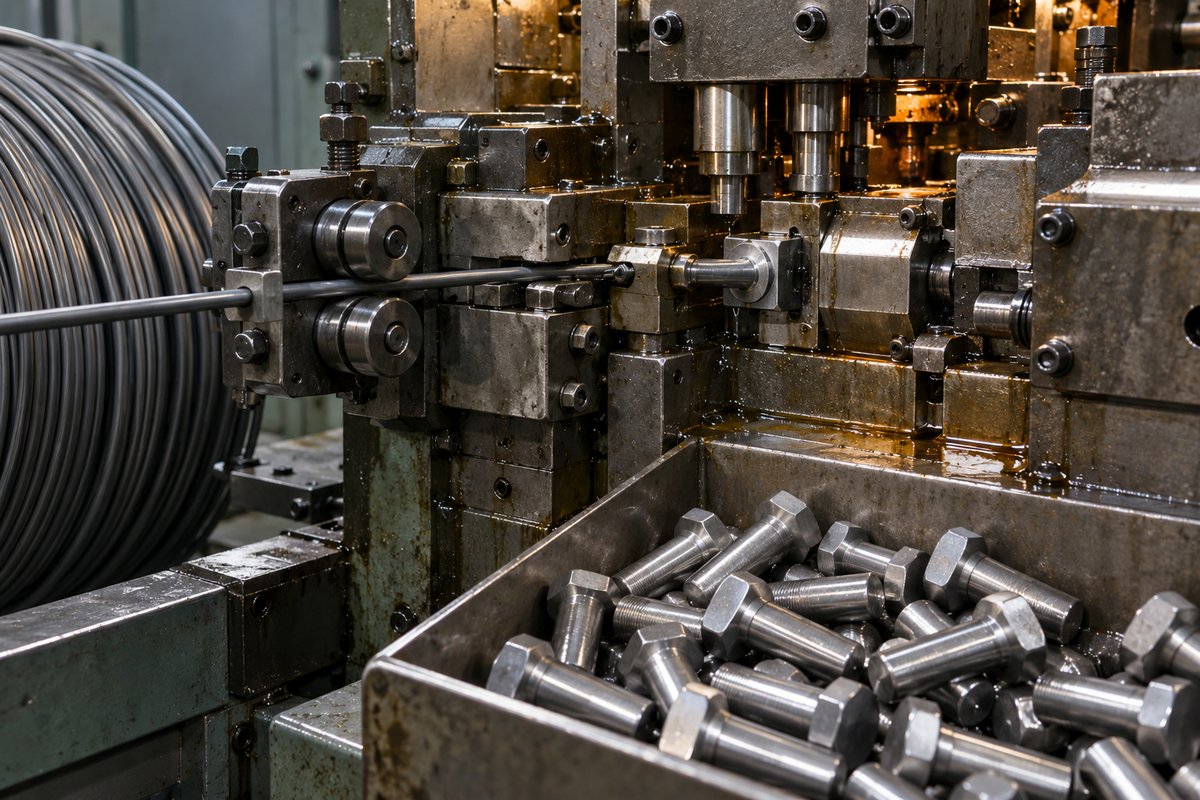
Cold heading forms heads and shoulders by striking wire at room temperature in a series of dies. Combined with thread rolling — pressing the thread form into the blank between dies — it is the standard way to produce screws and bolts at volume.
The cold heading process
- Wire preparation — coiled wire is drawn to size, annealed and coated for forming.
- Heading — wire is cut to length and struck through several die stations to form the head and shoulders.
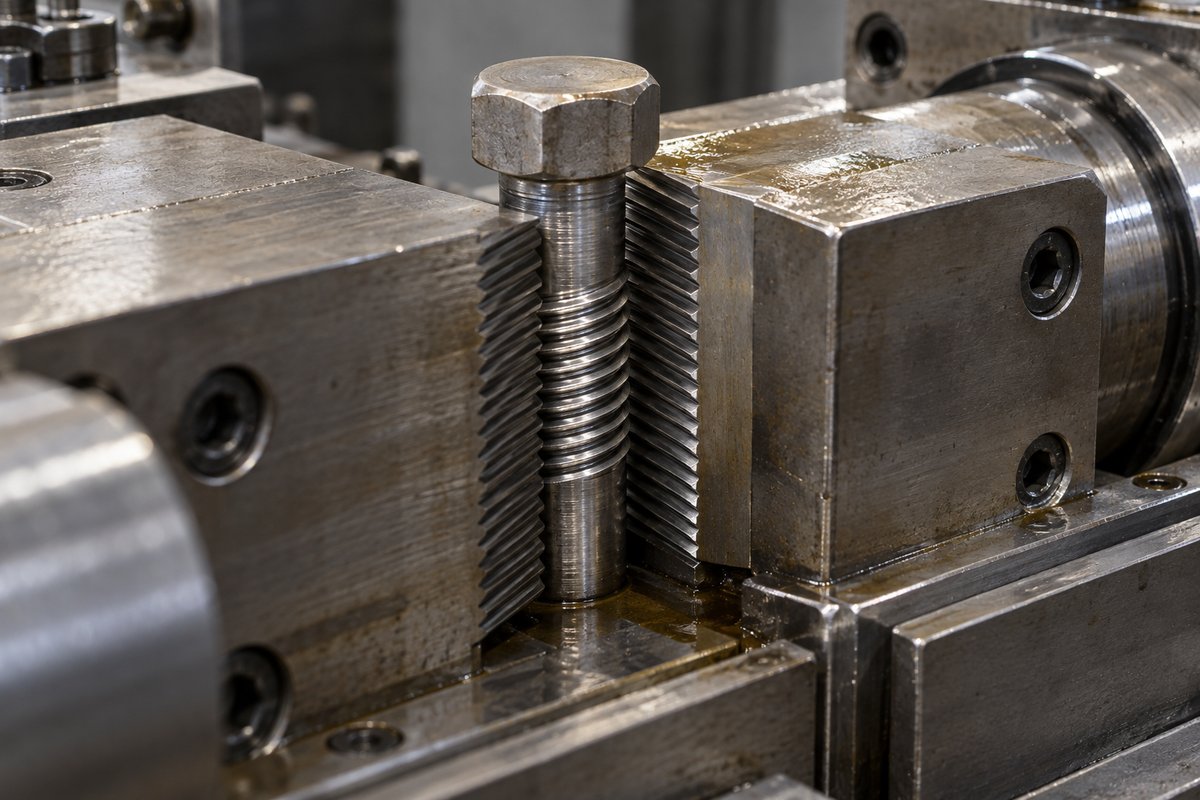
- Thread rolling — the blank is rolled between flat or round dies to form the thread.
- Heat treatment — quench and temper for the required property class (alloy steels).
- Finishing and inspection — plating or coating, then dimensional, thread-gauge and hardness checks.
Cold heading vs machining
| Cold heading + rolling | Machining | |
|---|---|---|
| Output | Very high | Low |
| Material waste | Minimal | Chips |
| Tooling | Dies required | Little or none |
| Best quantity | High volume | Prototype to low |
| Thread strength | Continuous grain flow, better fatigue resistance | Grain flow is cut |
| Shape freedom | Limited to headable shapes | High |
Why rolled threads are stronger
Thread rolling displaces material instead of cutting it, so the grain flow follows the thread profile and the surface is work-hardened. Rolled threads are therefore generally considered to have better fatigue strength than cut threads.
When volume production makes sense
- Quantities in the thousands and up (depends on shape and material)
- Heads and shoulders that can be cold formed
- Materials available as wire: carbon and alloy steel, stainless, brass, aluminum
FAQ
What is the difference between cold heading and hot forging?
Cold heading forms at room temperature, giving good accuracy and surface finish for small and medium fasteners at volume. Hot forging heats the material and is used for large-diameter bolts and severe deformation.
How much does cold heading tooling cost?
It depends on the shape and number of stations, so we quote from the drawing. For low quantities we compare it with turning.